Officer safety planning that is not grounded in accurate threat assessment tends to either over-equip for unlikely scenarios or under-equip for common ones. Looking at what officers actually encounter in the field, documented across incident reports and officer safety data, produces a clearer picture of where protective equipment investments deliver the most value.
Physical Confrontation Remains the Primary Threat
The most common injury-producing threat for law enforcement officers is physical assault during enforcement interactions. Punches, kicks, tackles, and improvised weapons account for a large proportion of line-of-duty injuries. Protective gloves like Haven Gear's Hard Knuckle gloves and limb protection address the injuries most likely to occur in these encounters. The National Institute of Justice tracks officer injury data that consistently identifies physical assault as the leading cause of non-fatal injury.
Crowd Control Scenarios Present Compounding Risks
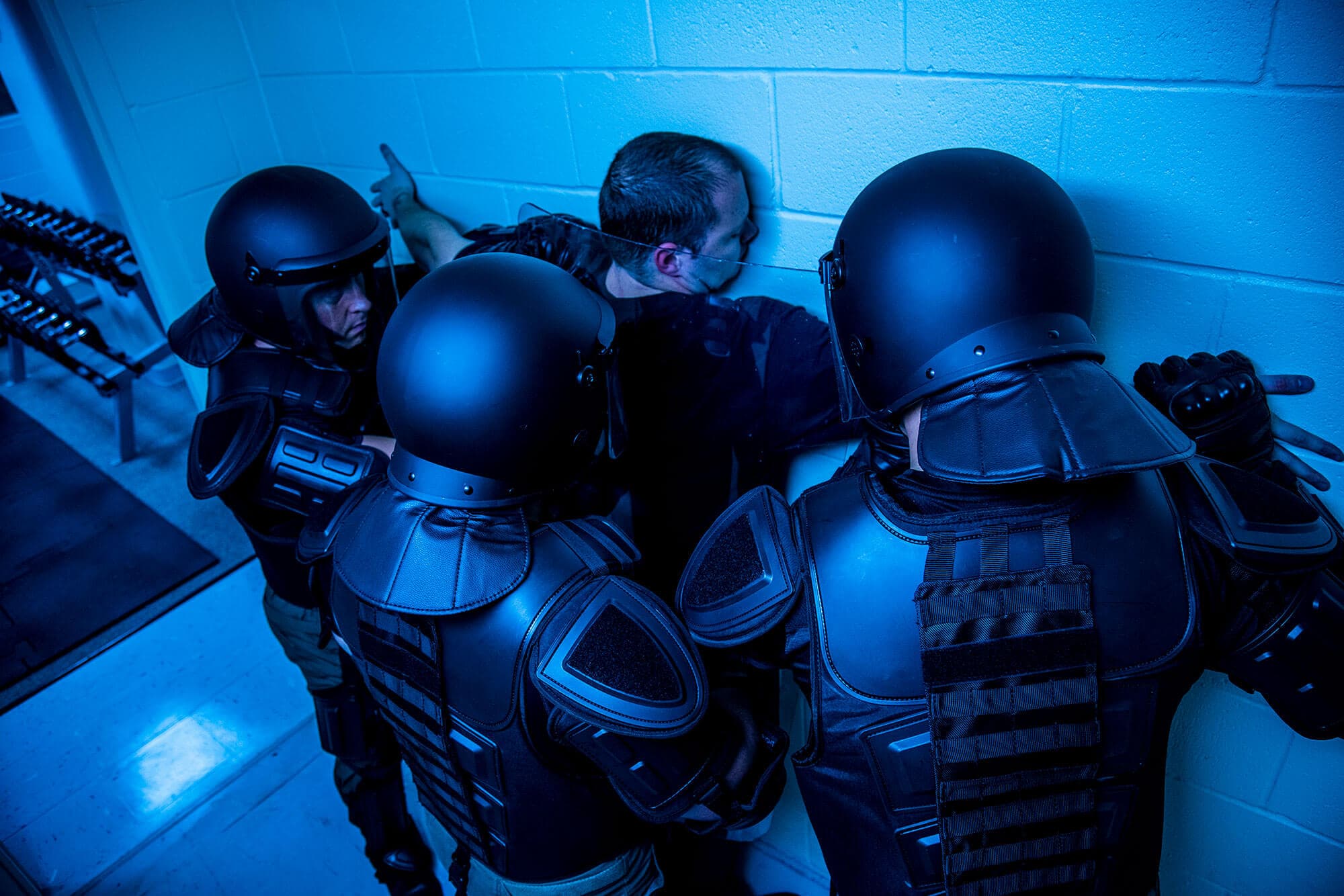
Large crowd control operations combine multiple threat types simultaneously: thrown projectiles, physical confrontation, chemical agents, and in serious incidents, fire. Officers managing a crowd line face threat vectors from multiple directions without the ability to fully assess any single one. Full-coverage riot suits are the appropriate response because the threat profile is not predictable. An officer who knows exactly what they will face can tailor their protection. An officer managing a dynamic crowd situation cannot.
Mounted Officers Face Unique Exposure
Mounted patrol officers face threats from above and below simultaneously, with the horse as an additional target that can be used against the rider. The elevated position creates exposure to thrown objects aimed at the face and upper body. The mounted rider suit was designed around these specific exposure patterns, with reinforced upper body coverage and configurations that work with equestrian posture.
Fatigue as a Threat Multiplier
Physical and cognitive fatigue from extended operations increases susceptibility to injury. An officer who is heat-fatigued after four hours in gear that traps heat is measurably more vulnerable than a fresh officer, not because the external threats have changed, but because their capacity to respond has degraded. Gear selection that accounts for fatigue management is directly relevant to threat response capability.