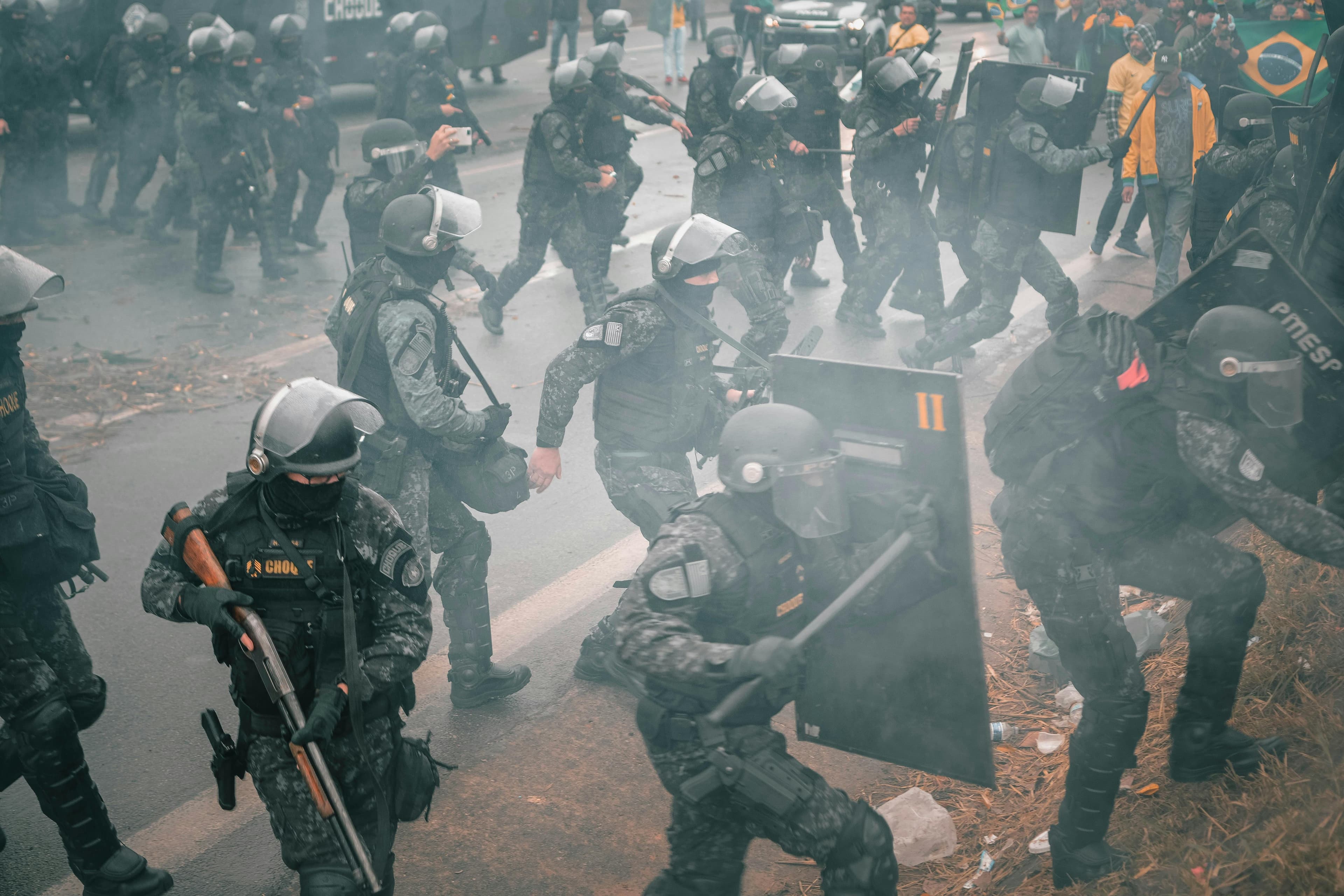
Riot gear and de-escalation are often discussed as if they exist in opposition to each other. The gear is associated with force; de-escalation is associated with restraint. The field evidence runs the other way. Officers who feel adequately protected make more deliberate decisions, hold positions longer before escalating, and manage crowd situations with more consistency than officers who feel exposed.
The Use-of-Force Continuum and Where Crowd Control Fits
The use-of-force continuum describes a graduated response framework: officer presence, verbal commands, soft controls, hard controls, less-lethal force, lethal force. Crowd control operations are designed to operate at the presence and verbal command levels for as long as possible, escalating through controlled stages only when lower levels have been exhausted or the situation demands it.
Effective de-escalation during a crowd situation requires that officers be able to maintain the lower levels of the continuum without feeling pressured to jump stages. The Police Executive Research Forum has documented that officers who feel adequately protected remain at the verbal command level significantly longer before escalating than officers with inadequate equipment. Protection does not push officers toward force. Lack of protection does.
Presence as a De-Escalation Tool
The first level of the continuum is officer presence. A professional, well-equipped, and coherent formation communicates authority without requiring any action. Crowds respond to the visible capability of the officers in front of them. An organized line with consistent equipment in good condition projects command differently than a disorganized group with mismatched gear.
Haven Gear's suit configurations address this directly. The Patrol suit is designed for deployments where visible riot gear would escalate rather than de-escalate a situation. Its textile outer shell maintains professional law enforcement appearance while providing real protective capability. Officers in Patrol suits can work a developing situation in community-facing mode, then respond if circumstances change, without the equipment transition that would otherwise require a staging break. View the Patrol Suit →
Protection Enables Patience
An officer who is not afraid of being injured by the situation in front of them has more options. They can hold a position instead of retreating. They can give verbal commands time to work instead of moving immediately to physical intervention. They can absorb a thrown object and maintain formation instead of reacting to it individually.
These are de-escalation outcomes. They happen because the officer has the protection to wait for lower-level responses to work. Gear that removes fear of injury from the officer's decision-making creates the conditions for de-escalation to succeed.
The Right Kit for Each Level
Departments that want to support de-escalation at every level of the continuum need equipment configured for each. Full riot kit for active crowd situations. Patrol suits for pre-escalation presence deployments. Limb kits staged in vehicles for officers who may need to transition rapidly. The equipment available to an officer shapes what responses are available to them. Gaps in the kit limit options exactly when more options are needed.