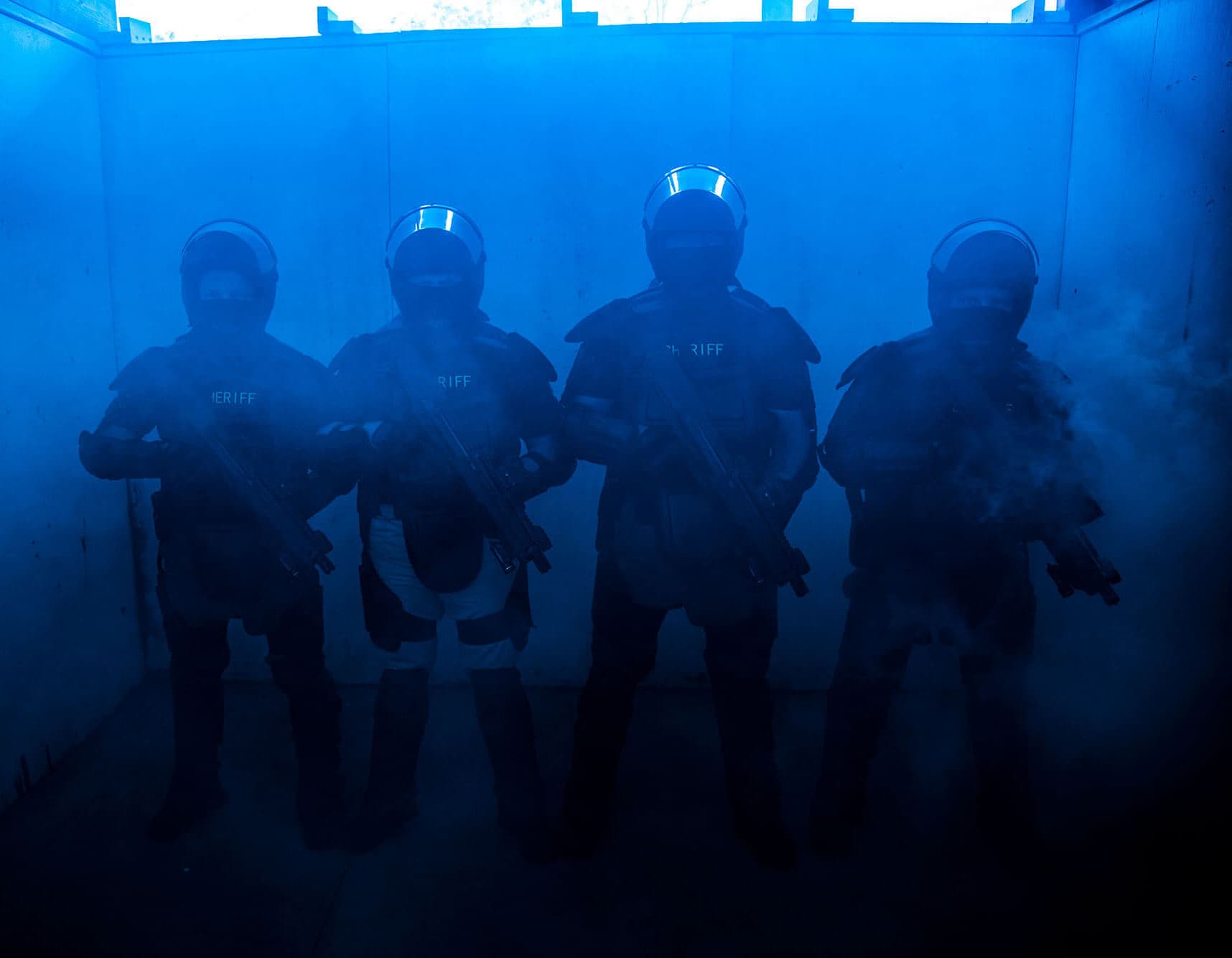
Chemical agents, including OC (oleoresin capsicum) spray and CS (o-Chlorobenzylidene malononitrile) gas, are regularly deployed in crowd control situations, either by law enforcement as a control measure or by protesters as a counter-measure. Officers in crowd control operations without adequate respiratory protection face incapacitation at exactly the moments when operational effectiveness matters most.
The Threat Profile of Common Chemical Agents
OC spray causes immediate intense pain, involuntary eye closure, coughing, and respiratory distress. CS gas produces similar effects over a wider area. Both are designed to incapacitate temporarily, and both affect officers as effectively as civilians if inhaled without protection. An officer affected by CS gas in a crowd line is not just personally at risk. They are a gap in the formation that creates risk for everyone around them.
The National Institute of Justice has published research on officer exposure to chemical agents during crowd control operations, noting that proper respiratory protection is one of the most effective measures for maintaining unit cohesion during chemical agent deployment.
Gas Mask Compatibility With Riot Helmets
A gas mask that cannot be properly fitted with a riot helmet provides neither adequate chemical protection nor adequate impact protection. The two components must be compatible. Not all riot helmets provide sufficient face clearance for gas mask use. The HG-HMAT helmet is designed with face clearance and a bubble shield option that accommodates gas mask wear. Verifying this compatibility is essential before deploying both systems together.
Training for Donning Under Stress
Gas mask donning must be practiced until it is automatic. The ability to don a mask quickly in a contaminated environment, without removing gloves, without clear visibility, and under stress, requires repetitive training that builds motor memory. Officers who have practiced this drill in realistic conditions are meaningfully better protected than officers who have only donned a mask in a comfortable training room.
Integration with a complete riot kit, including the riot suit, gloves, and helmet, should be part of any chemical agent response training. Each component interacts with the others during donning and during operation, and understanding those interactions takes practice.