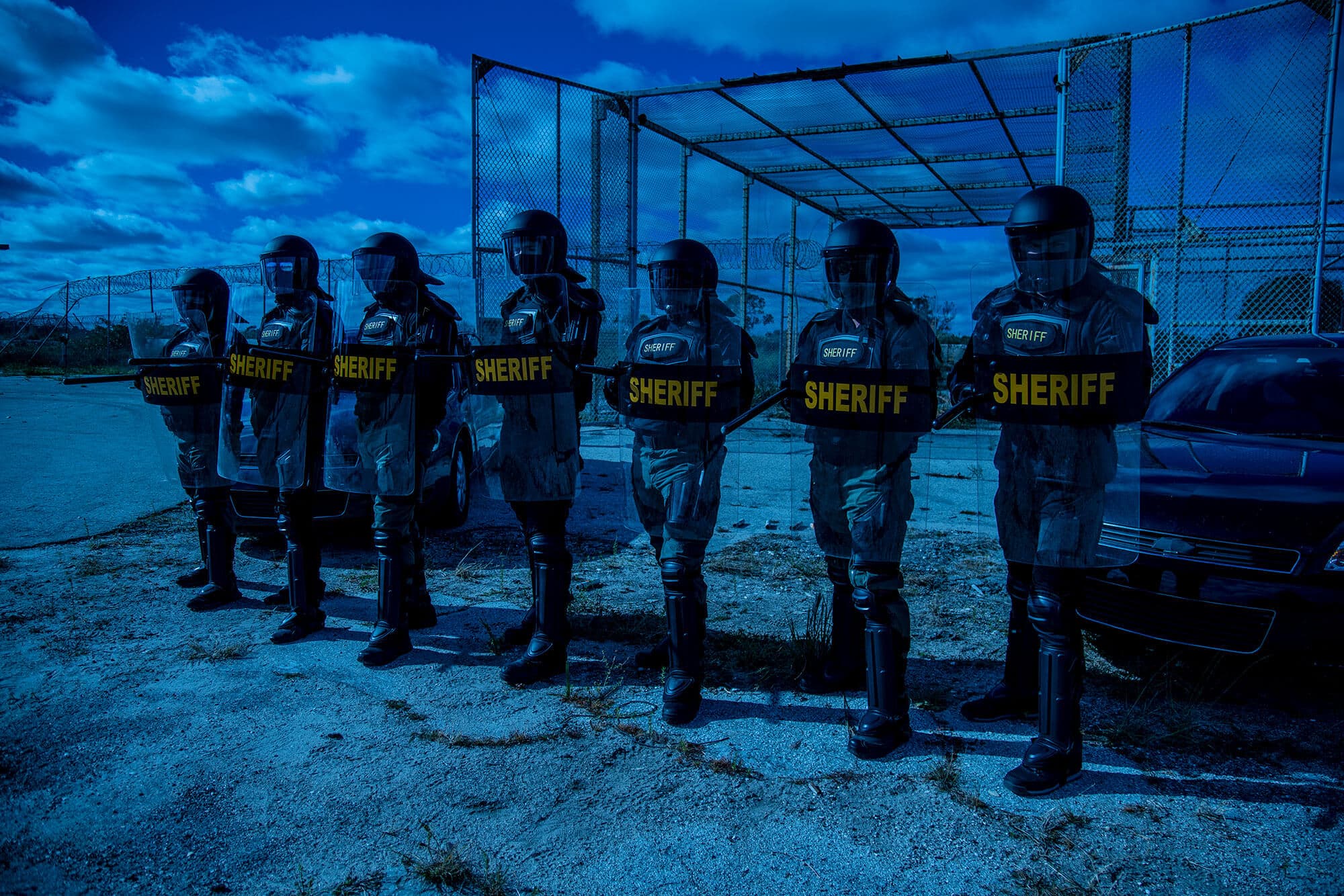
Crowd control operations present a specific safety challenge because threats can come from multiple directions simultaneously, the environment is dynamic and difficult to fully surveil, and officers are operating in close proximity to a large number of people whose intentions are not always apparent. Safety in this environment cannot be achieved through any single measure.
Protective Equipment as the First Layer
Officers in crowd control assignments need protective equipment appropriate to the assessed threat level of the deployment. The Patrol suit is appropriate for managed public events where the crowd is largely cooperative. The Enforcer MP is appropriate when the situation has the potential for active resistance, thrown projectiles, or physical confrontation. Matching gear selection to threat assessment is the first layer of safety management.
Shield Lines and Formation Discipline
A well-maintained shield line significantly reduces individual officer exposure to thrown projectiles by providing a physical barrier that intercepts impacts before they reach officers. Formation discipline, maintaining spacing, keeping shields properly overlapped, and managing transitions without creating gaps, is as important to officer safety as the shields themselves. Police Chief Magazine has published research on crowd control formation training showing that formation discipline is a leading predictor of officer injury rates in crowd operations.
Communication and Situational Awareness
Riot helmets reduce hearing and peripheral vision, which are primary situational awareness inputs. Units operating in riot gear need augmented communication systems, hand signals, and established protocols for communicating under conditions where verbal communication may be difficult. These protocols should be trained in full gear, not just in standard attire, because the gear constraints change how communication works in practice.
Pre-Positioning of Medical Support
Medical support pre-positioned at crowd control operations allows faster response when injuries occur. The first minutes of response to a heat casualty, a serious impact injury, or a chemical exposure incident determine outcomes. Departments that have medical personnel staged at operations report better outcomes than those relying on delayed emergency medical response.