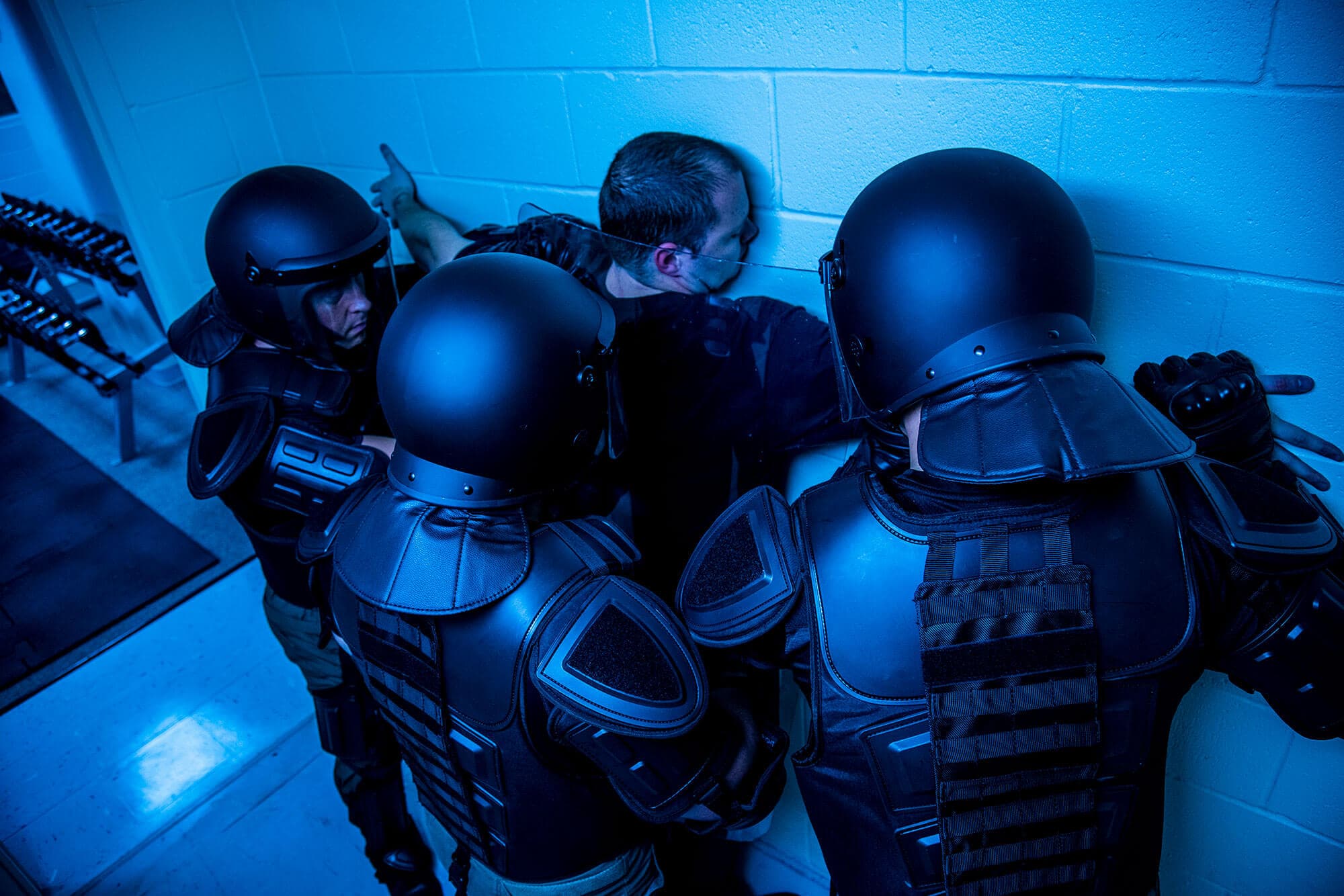
Lethal force authorization in law enforcement operates within a defined legal and policy framework. The Supreme Court's standard in Graham v. Connor, which requires that force be objectively reasonable given the circumstances known to the officer at the time, creates the foundational evaluation criteria. For crowd control and riot scenarios specifically, the gear an officer carries and the protection they have directly affects what is objectively reasonable in a given situation.
Gear and the Force Continuum
Officers who are adequately protected by their riot gear have more options along the use-of-force continuum than officers who are not. An officer facing a physical threat while wearing impact-rated protection can consider control and defensive options that an inadequately protected officer cannot. This is not a philosophical point. It is a practical reality that better-equipped officers in crowd control situations use lethal force less often, because they have more tools available at lower force levels.
The National Institute of Justice has published research on use-of-force patterns in crowd control situations noting a correlation between officer protective equipment quality and the frequency of escalation to higher force levels.
Ballistic Integration for Mixed Threat Scenarios
When crowd control situations involve credible firearm threats, officers need both riot protection and ballistic protection simultaneously. The Enforcer MP's integrated ballistic carrier allows officers to carry hard plates and soft armor within the riot suit, which addresses mixed threat scenarios without requiring officers to choose between protection types. This configuration is relevant to situations where crowd control and firearm response may be required simultaneously.
Documentation and Accountability
Departments that equip their officers with certified, well-documented protective equipment are in a better position for use-of-force accountability reviews. When an officer can demonstrate that their gear met specific certified standards and that it was properly maintained and fitted, the documentation supports rather than undermines the credibility of their use-of-force decisions. The Department of Justice's use-of-force guidance addresses the relationship between officer protection level and force decision documentation.