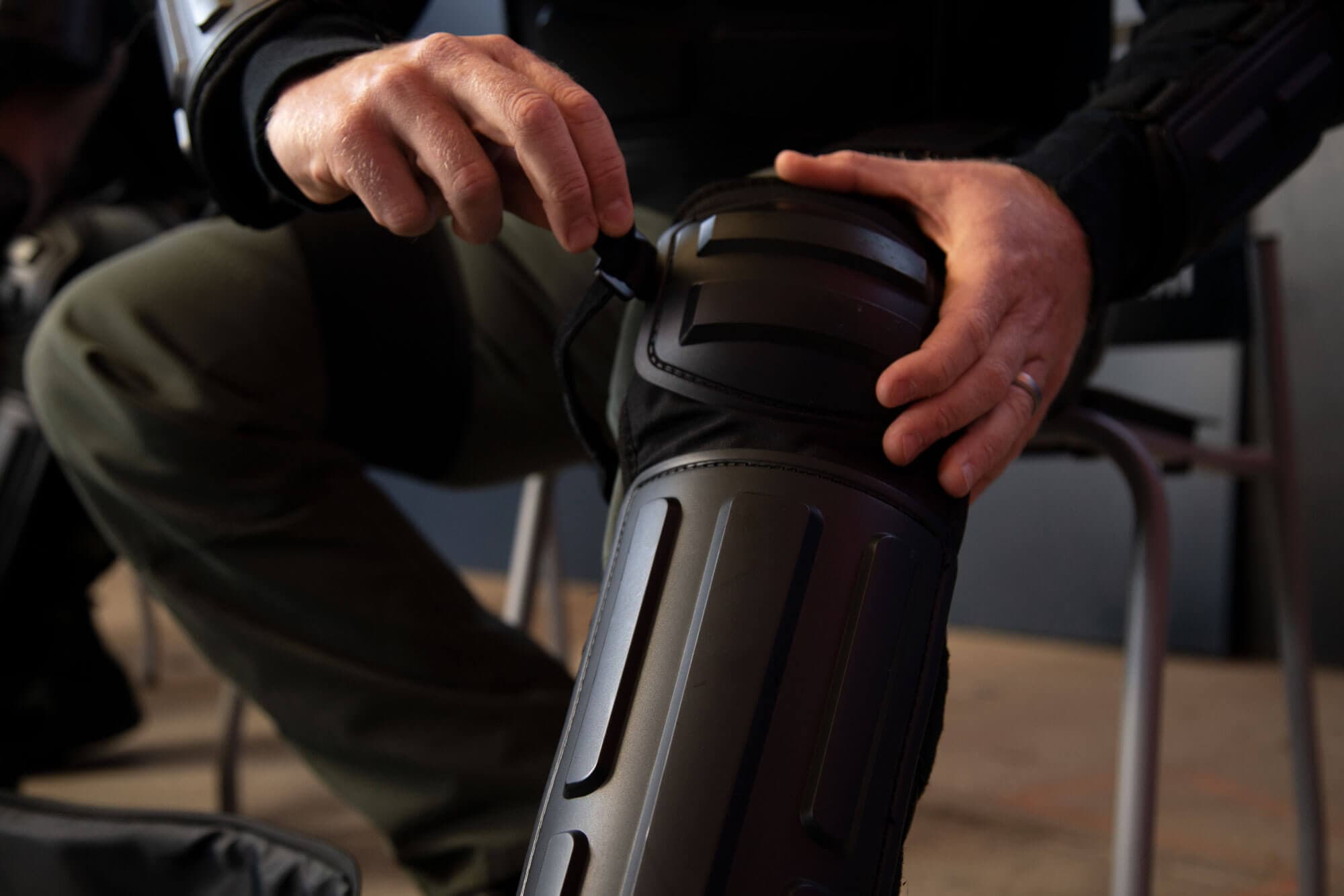
Read the construction specs for most modern riot suits and polypropylene appears as the primary panel material. It did not become the standard by accident. Polypropylene's specific combination of properties makes it the right material for protective panels in ways that available alternatives do not match.
What Polypropylene Is and Why It Works
Polypropylene is a thermoplastic polymer with a long track record in industrial and safety applications before it entered law enforcement gear. It is lightweight relative to metals and harder polymers, impact-resistant in ways that matter for blunt force absorption, and moldable into complex shapes that follow the body's natural contours.
That moldability matters more than it sounds. A flat panel and a contoured panel perform differently when a force is applied off-center. Polypropylene allows manufacturers to shape panels that fit the body correctly, which improves both protection and mobility compared to flat rigid panels of any material. An elbow protector that fits the elbow stays in position during movement; one that does not will rotate or shift and leave the joint uncovered.
Fire Resistance
Polypropylene used in law enforcement protective gear is formulated with flame-retardant additives that bring it into compliance with international fire resistance standards. Haven Gear's Enforcer MP panels meet British Standard BS 7971-3:2002, German standard DIN 53438, and ISO 6941. These are third-party verified standards covering real-world flame exposure scenarios relevant to crowd control operations near fires, flares, or incendiary devices.
UV and Environmental Stability
Law enforcement gear spends significant time in patrol vehicles, often in direct or indirect sunlight. UV degradation is a real failure mode for materials that are not UV-stabilized. Polypropylene has inherently good UV stability compared to competing polymer materials, and formulations used in protective gear are specifically compounded for extended outdoor and vehicle exposure. This directly affects how long the panels maintain their protective properties between replacement cycles.
What Polypropylene Does Not Do
Polypropylene panels are built for blunt force and stab resistance. They are not ballistic armor. Departments that need integrated ballistic capability require a suit system that accommodates separate ballistic inserts or carriers. The Enforcer MP's integrated multi-function ballistic carrier addresses this by building ballistic accommodation into the same garment as the polypropylene protection shell. View the Enforcer MP →