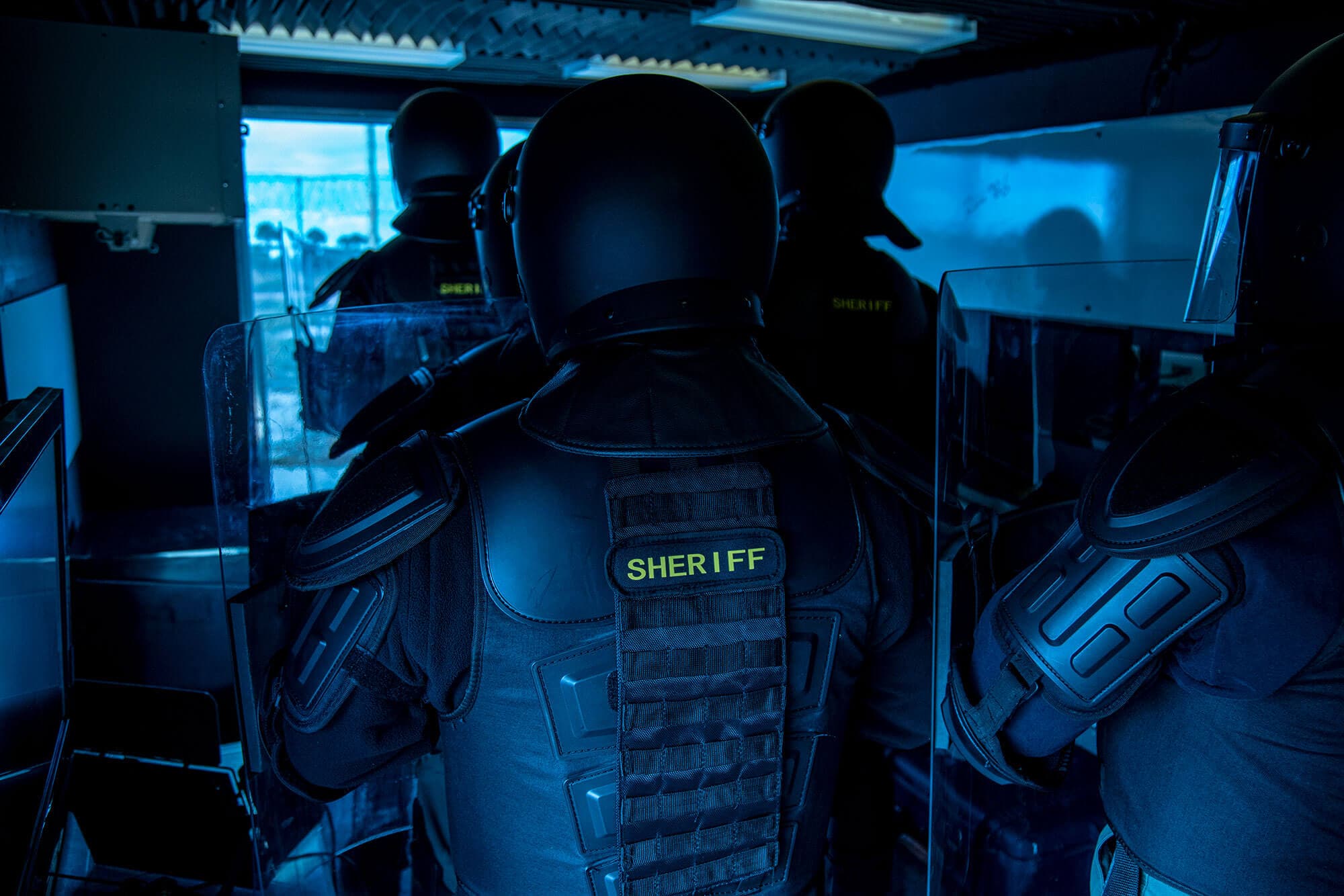
In emergency response situations, response time is not just a performance metric. It is often a direct predictor of outcomes. Whether the context is medical response, active threat response, or protection donning in an escalating situation, the time between the decision to respond and the readiness to act is a variable that saves or costs lives.
The Gear Configuration Problem
Protective gear that takes five minutes to don correctly is not available in the first four minutes of a developing incident. For patrol officers who may encounter escalating situations without the staging time that a planned deployment provides, this gap is a concrete safety problem. The design of the gear itself, the attachment system, the donning sequence, and the physical complexity of putting it on, directly affects how fast meaningful protection is achievable.
Haven Gear designs its products with donning speed as an explicit requirement. The Riot Limb Set and Arsenal kit components are specifically designed for single-officer donning without assistance, with attachment points operable with gloves and under time pressure. The National Institute of Justice has documented donning time as a factor in protective equipment effectiveness studies, noting that faster donning correlates with higher gear wear rates in rapid response situations.
Vehicle Staging and Pre-Positioning
How gear is stored in a patrol vehicle determines how fast it is accessible. Gear buried under other equipment, stored in a disorganized trunk, or split across multiple locations in the vehicle adds seconds to access time that compound into minutes when an officer is under stress and moving quickly. Standardized vehicle staging protocols that position rapid-response gear in a consistent, immediately accessible location are as important as the gear design itself.
Training the Donning Sequence to Automatic
The donning sequence for any piece of emergency equipment needs to be trained to the point where it does not require conscious attention to execute. An officer who has to think about which strap goes where is slower and more error-prone under stress than one who has automated the sequence through repetitive training. Regular timed donning drills, conducted in operational conditions, build the automaticity that makes rapid response protection actually available when it is needed.