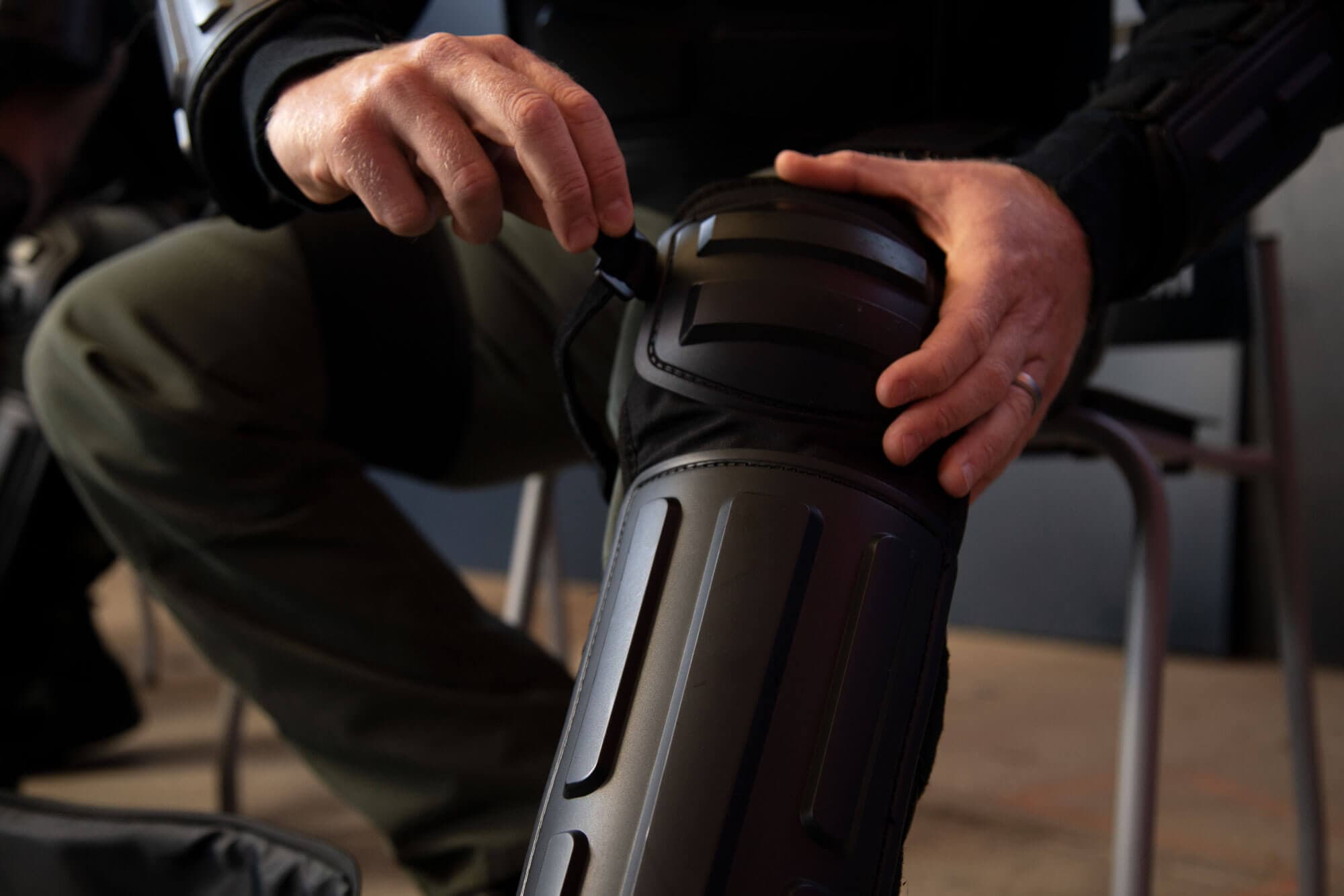
Riot gear durability is affected by deployment frequency, the types of threats encountered, maintenance practices, and storage conditions. Gear that is used rarely and stored correctly will last significantly longer than gear that sees frequent deployment, absorbs multiple serious impacts, and is not inspected and maintained on a regular schedule. Understanding the durability factors helps departments plan their replacement cycles and maintenance budgets accurately.
What Actually Degrades in Riot Gear
The components most vulnerable to degradation are the ones subject to the most mechanical stress: straps, buckles, face shield hinges, and panel attachment points. The polypropylene panels themselves are quite durable and typically outlast the attachment and closure systems. Regular inspection should focus on these mechanical components first. A panel with excellent impact protection ratings that is attached with a degraded strap is not providing that protection reliably in the field.
PoliceOne has published gear maintenance guidance noting that strap and buckle replacement is the most common maintenance need in riot gear programs, and that departments with regular replacement schedules for these components maintain gear protection ratings significantly longer than those that replace only on visible failure.
Fire Resistance and Chemical Exposure
Fire-resistant textile treatments can degrade over time with washing and chemical exposure. Riot suits that have been exposed to chemical agents and then washed repeatedly may have reduced fire resistance that is not visually apparent. Manufacturer guidance on washing protocols and fire resistance maintenance should be followed specifically, not approximated. Haven Gear provides care instructions with all suit systems that address this.
Replacement Parts Rather Than Full Replacement
Modular gear systems that support component replacement extend the effective life of the overall system substantially. When a strap fails or a buckle cracks, replacing the component is far more cost-effective than replacing the complete suit. Haven Gear maintains a replacement parts inventory specifically for this purpose. Departments that build component replacement into their maintenance program rather than replacing complete systems when individual parts fail report significantly lower per-year gear costs.