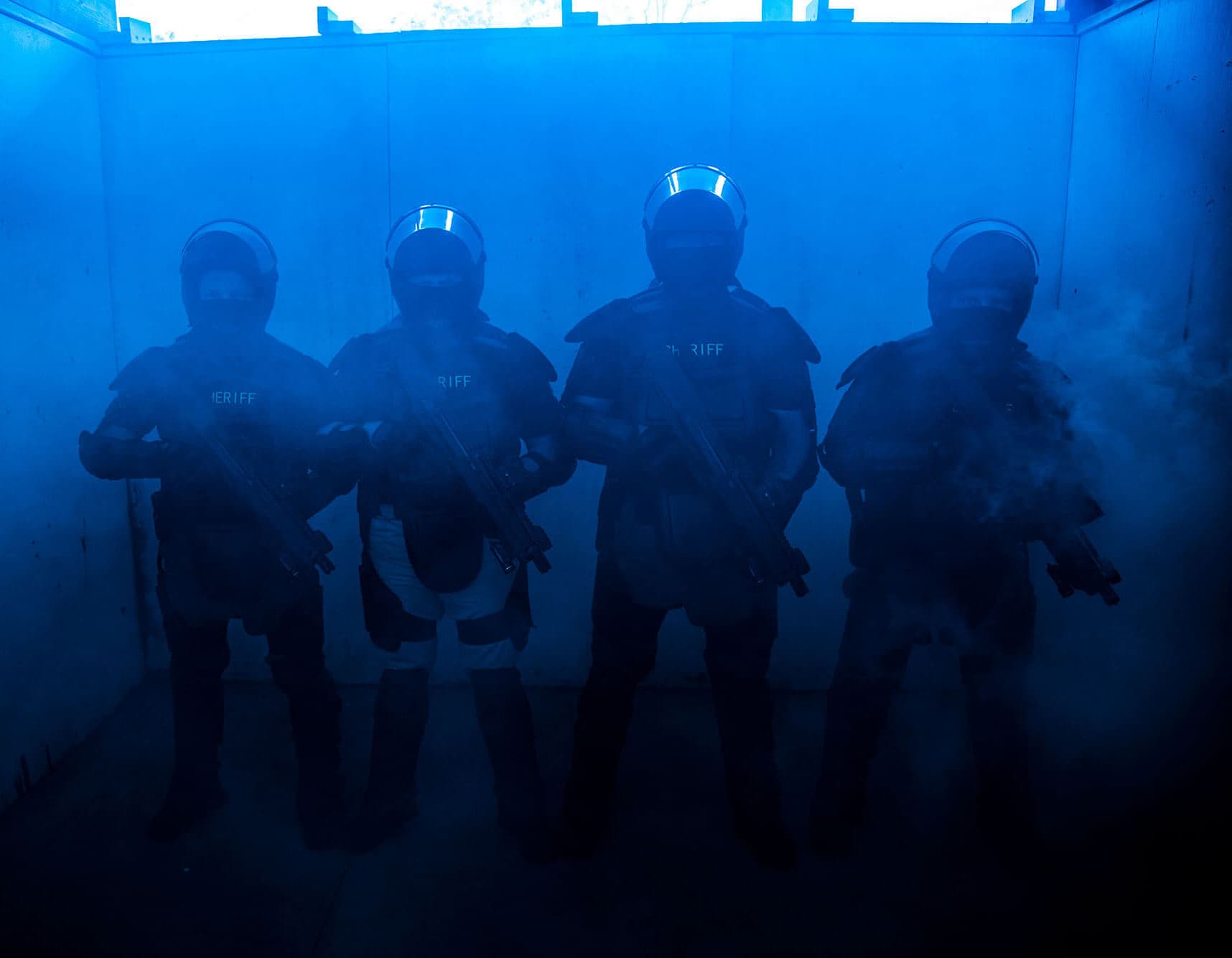
A riot helmet that protects the head but has a face shield that fogs after twenty minutes of operation is functionally inadequate for sustained deployment. A helmet with excellent face shield clarity but insufficient head coverage for the deployment threat profile provides incomplete protection. Evaluating riot helmets and face shields as a system, rather than independently, produces better decisions than looking at either component in isolation.
Shell Construction and Coverage
The outer shell provides the primary impact absorption layer. The coverage area, specifically whether the shell extends to the rear and lower sides of the head, determines the threat vectors addressed. Full-coverage shells that extend to the rear protect against threats from multiple directions. Partial-coverage shells are lighter but accept more exposure. The HG-HMAT provides full-coverage protection appropriate for crowd control environments where thrown objects may come from multiple directions.
Face Shield Material and Coating
Polycarbonate face shields provide optical clarity, impact resistance, and resistance to scratching adequate for operational use. Anti-fog coating is critical for sustained wear. A shield that fogs forces officers to raise it in contaminated environments, which defeats its purpose. Evaluate face shield anti-fog performance specifically by wearing the helmet during physical activity for extended periods in realistic temperature conditions. PoliceOne has published side-by-side face shield evaluations showing significant variation in anti-fog performance across manufacturers under operational conditions.
Face Shield Geometry: Straight Versus Bubble
Straight (flat) face shields provide a wider optical field and lighter weight. Bubble shields extend outward from the face, providing clearance for communications equipment and gas masks. The choice should be driven by what officers need to wear in combination with the helmet. Departments that require gas mask compatibility need to confirm that their specific mask model fits within the face clearance of whatever shield geometry they are considering.
Retention System
The retention system, specifically the chinstrap and head adjustment system, determines whether the helmet stays in the correct position under physical stress. A helmet that moves during a physical confrontation reduces protection and creates distraction at precisely the wrong moment. Verify retention under dynamic movement, not just static fit. Ensure compatibility with your suit system for full kit integration.