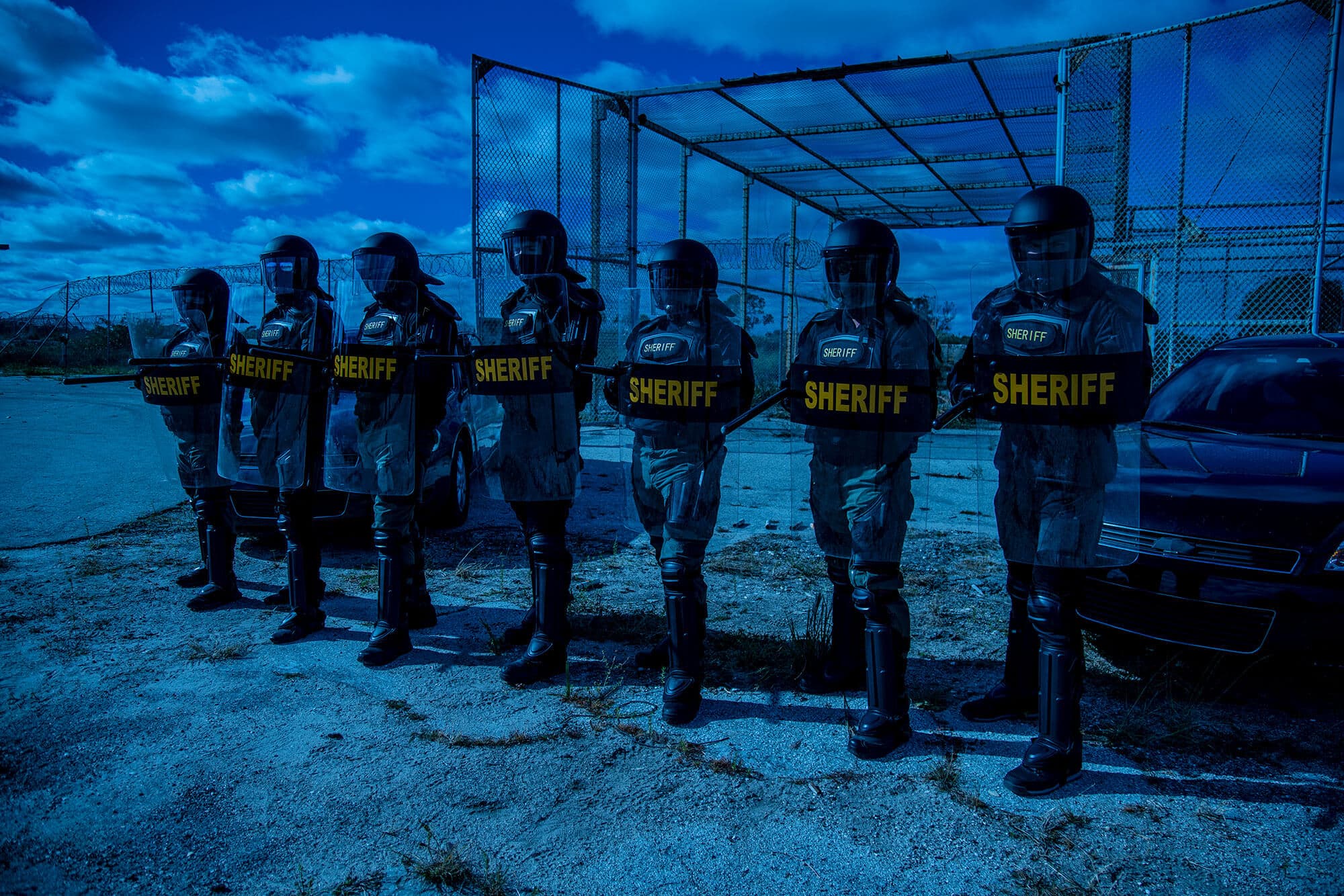
The riot line is the foundational formation in crowd control operations. It appears simple from the outside but depends on specific equipment configurations, role assignments, and coordination between officers to function the way it is designed to. Understanding how it works explains why specific gear decisions, shield size, baton length, suit weight, matter more than they might appear in a product catalog.
What the Formation Does
A riot line establishes a physical barrier between officers and a crowd. It creates a controlled boundary that communicates authority and containment without requiring active force. When the line holds, it gives command staff time to assess the situation and coordinate a response. When it moves, it does so as a unit, maintaining the boundary geometry that makes it effective.
The line is both a physical and psychological tool. A coherent, professional-looking formation with consistent equipment projects command presence. A ragged line with inconsistent gear undermines that presence before any contact occurs.
Positions and Equipment by Role
A standard riot line has three functional positions, each with different equipment requirements.
Shield carriers hold the front position. Their primary tool is the polycarbonate shield. The 24x36 shield is the standard for most line positions because it provides full torso coverage without the weight penalty of the 48-inch version over extended deployments. Shield carriers need suits that allow them to brace and absorb force without losing footing. Full limb coverage is particularly important here because shields protect the front but leave the arms and legs exposed on contact. View Shields →
Baton officers work immediately behind the shield line. The 34-inch baton is the right length for this position because it reaches past the shield carriers to the crowd without requiring the baton officer to step forward. A 28-inch baton in this position creates a reach deficit that forces the officer to change their position, which disrupts the line. View Batons →
Team leaders need clear visibility in both directions: down the line and into the crowd. Helmet bubble shields provide better lateral visibility than straight shields, which is relevant for officers whose role requires reading the full situation rather than focusing on what is directly in front of them. View Helmets →
Mobility and Formation Transitions
Static line formations do not stay static. Crowd situations shift, and the line has to move with them. Officers who cannot move quickly in their gear create gaps when the formation transitions. This is where suit weight becomes a performance factor rather than a comfort consideration. Haven Gear's Enforcer MP at approximately 10 lbs base weight allows officers to maintain formation pace over deployments that routinely run several hours. Heavier legacy gear degrades pace earlier and creates exactly the gaps that compromise the formation.
Equipment Consistency Across the Line
A riot line with inconsistent equipment has inconsistent capability. Shield carriers using shields of different heights have different coverage profiles. Baton officers with different reach produce different response characteristics. Departments that standardize their riot line kit around a single equipment configuration get a more predictable and more effective formation than those whose line reflects whatever gear is available at the time.